A carbon block filter is where the loose pieces of carbon are compressed together to form a filter.
In a carbon block filter, one pound of compressed activated carbon (the amount in a standard ten-inch filter cartridge) has the equivalent surface area of a 160 acre farm, making it one of the most absorbent materials known to man.
Because of the compressed nature of a carbon block filter, water flow rates are lower than that of a GAC filter made of loose medium. And flow rates are impacted by the micron rating of the filter. A carbon block filter is rated to a certain micron rating depending on how much the carbon is compressed. The smaller the micron rating, the finer the filtration and the lower the flow rate.
GAC vs. Carbon Block Filters
| GAC (Granular Activated Carbon) | Carbon Block | |
|
Appearance |
|
|
|
Medium Type
|
Loose carbon granules
|
Compressed carbon
|
|
Filtration Purpose
|
Prefilter & Polishing filter
|
Prefilter
|
|
Typical Use
|
To improve taste and odor of water by removing chlorine, hydrogen sulfide (rotten egg odor), etc. See complete list here.
|
Can filter sediment, as well as pesticides, heavy metals, and other contaminants
|
|
Flow Rates
|
Generally higher flow rates
|
Generally lower flow rates
|
|
How Often to Replace
|
Every 6-12 months*
|
Every 6-12 months*
|
|
Advantages
|
May do a better job at adsorbing certain contaminants
|
Can adsorb AND filter
|
Carbon Block Filters vs. Granulated Carbon Filters
What is the difference between a carbon block filter and a GAC filter? Carbon block filters and GAC filters are made of the same material, but one is made of ground up loose carbon and the other is the loose carbon that has been compressed.
Many water filter systems use both carbon block AND GAC filters in the water filtration process.
Carbon block filters are made of a solid block of compressed carbon and are often used as a pre-filter in reverse osmosis and other water filtration systems. Carbon block water filters are extremely effective in filtering out a variety of contaminants including very small contaminants or particle size. Water will often flow slower during this filtration stage due to the compact nature of the compressed carbon.
The granular activated carbon or GAC water filter is made of loose carbon granules. Water flows more freely through this stage, so flow rates are higher for GAC filters than carbon block filters. GAC filters also have very high adsorption properties and can remove contaminants including chlorine, hydrogen sulfide, lead and much more.
Carbon Block Filters are Rated in Microns
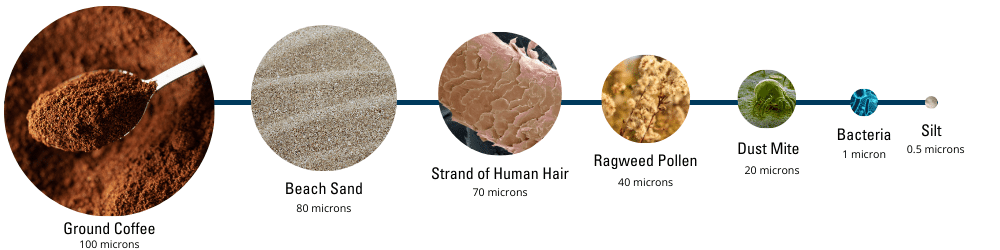
Carbon block filters are rated by the size of contaminants that can be removed at the micron level. Generally, the range is from 50 microns down to .5 microns. The higher the rating, the larger the contaminant size. Very small contaminants will need to be filtered with a small micron size rated filter, such as .5-micron rating.
Reverse Osmosis Filter Change Schedule
|
Sediment Filter |
Carbon Filter
|
RO Membrane |
GAC Polishing
|
|
Change out every 6-12 months
|
Change out every 6-12 months |
Change out every 24 months |
Change out every 6-12 months |
*Filter change schedule may vary based on local water conditions and household usage
How Often Should Carbon Filters Be Changed?
For carbon filters used in reverse osmosis drinking water systems, both the carbon filter and the polishing filter (granular activated carbon filter) should be replaced every 6-12 months. Ultimately, the lifespan of a carbon filter can vary based on how dirty or contaminated the water is. Carbon quality, humidity and usage can also factor into how long a carbon filter can last.
FAQs
Are Carbon Filters Safe?
Yes. In fact, many of the carbon filters we carry have been tested and rated by a third party for material safety.
Do Charcoal Water Filters Work?
Charcoal is a type of carbon that was used in the past, but rarely used now. Typically, all carbon filters are now made from coconut. Usually when someone refers to "charcoal filters", they mean carbon filters, and carbon filters are extremely effective in removing contaminants from water.
What are Coconut Water Filters?
Coconut water filters are made of coconut husk carbon that has been vacuum heated in a lab and cleaned. Coconut is the most common type of carbon used in water filters today as they are effective at removing bad tastes, odors, VOCs, chlorine, pesticides, and more.
What are Catalytic Carbon Filters?
Catalytic carbon filters are a type of carbon filter that contains a special catalytic carbon block. Catalytic carbon filters are highly effective at chlorine and chloramine reduction.
What do Carbon Filters Remove from Water?
Carbon filters can effectively remove or reduce many contaminants from water including VOCs, chlorine, lead, fluoride, pesticides and much more. For a more comprehensive list, read What Do Carbon Filters Remove.
 Turkish
  English
  German
  Italian
  Japanese
  Korean
  Portuguese
  Russian
  Spanish
  Vietnamese